
Knowledge Base
Knowledge Base Matching
Matching Tab
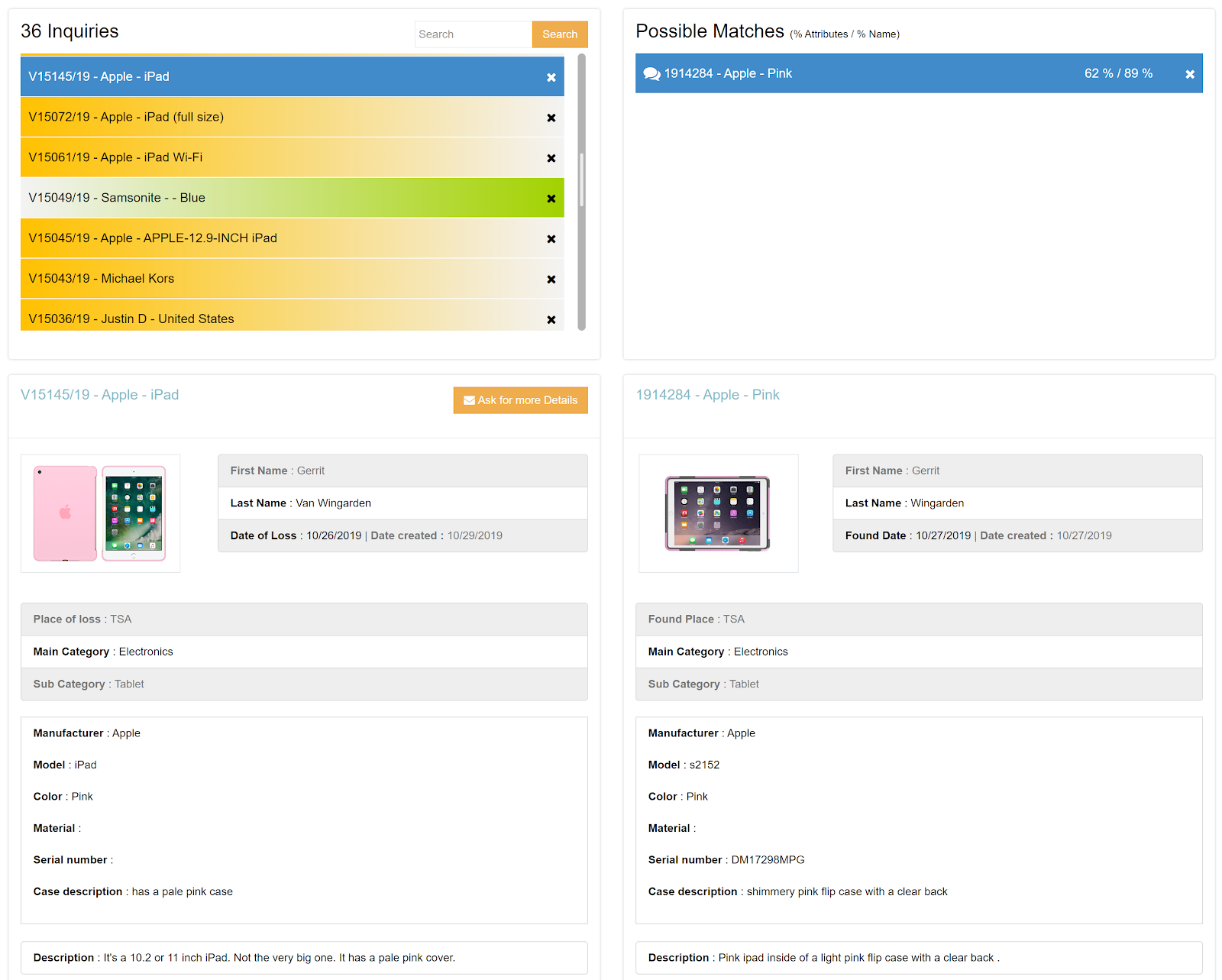
The Smart Matching Algorithms in the Lost and Found Software ensure customers are automatically identified as owners of found items. Date, Name and other Characteristics (category, type, brand, date, color, serial number, etc.) of the customer inquiry and the found item are compared and weighed. The results are then displayed to authorized users and tagged with a percentage that expresses the likelihood of a successful match.
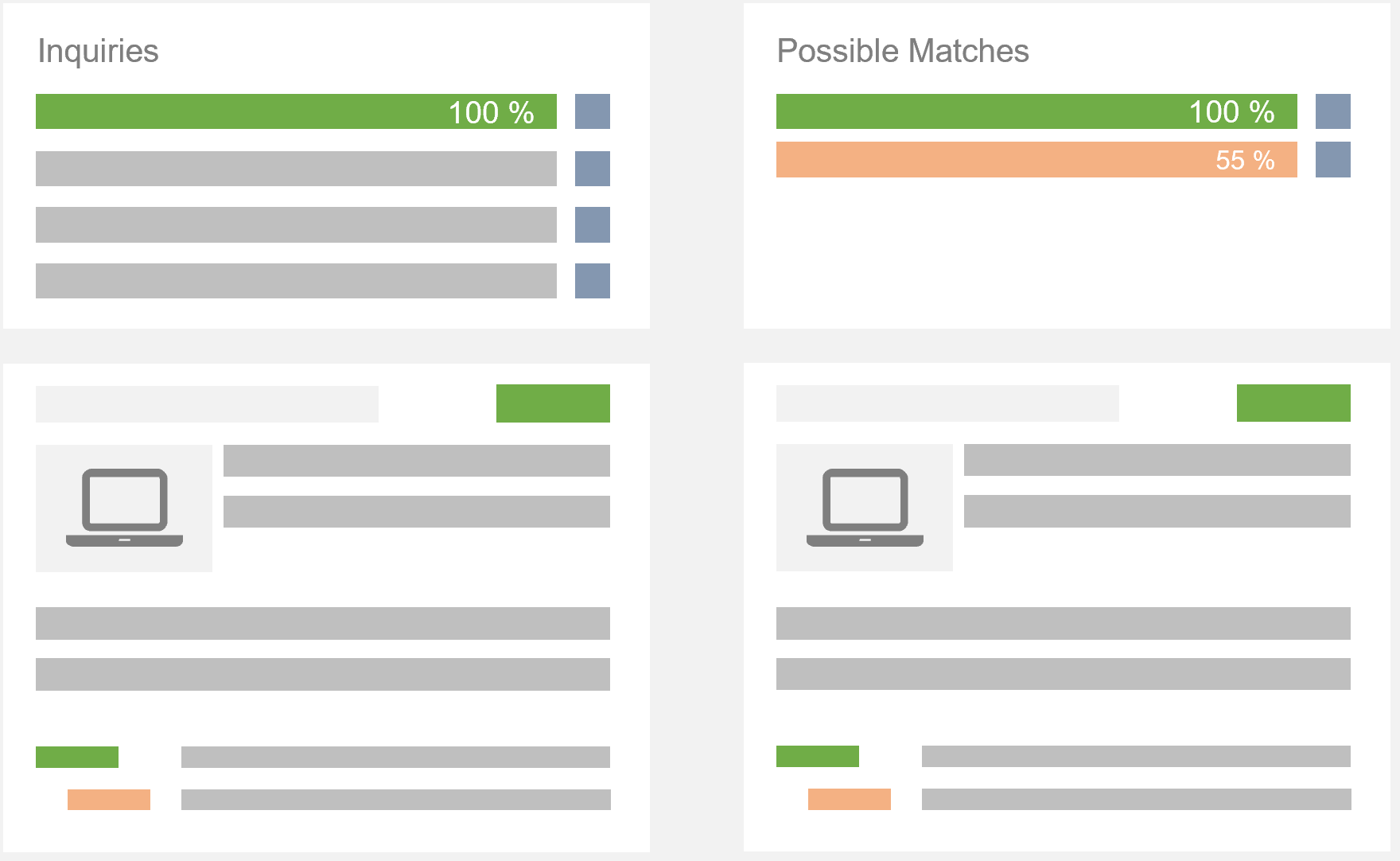
In the matching tab, you can see the customer inquiry on the left-hand side and the possible matches on the right-hand side. The better the match, meaning the more similar a lost item inquiry and a found item are, the higher the percentage. The first percentage displays the similarity of the attributes. The second percentage displays the similarity of the name.

Watch our Video Tutorial here
Working the matching queue
- Check the categories first – a wrong category on the inquiry is the most common reason for missed matches. Correct it.
- Compare inquiry (left) and suggestion (right). Hover over the score to see the individual percentages.
- Unsure, or you need more information from the customer? Mark the match as favourite.
- Clearly not a match? Remove it with X (this can be undone).
- It is a match: confirm with the green puzzle icon. The inquiry data is copied to the Owner tab, the inquiry is closed and automated inquiry mails stop.
- Contact the customer yourself via the Owner tab – confirming does not notify them (unless your organisation enabled a success mail).
Good to know
- Matching uses category, attributes, date, description and owner name – not the found or lost place.
- The owner name is matched separately. If the same name is on two items, both match, even if they are a backpack and a laptop.
- A pink row with 100 % means the customer claimed the item in the public portal. See: Customer Claims from the Public Portal.
- Matching runs continuously and updates whenever an inquiry or found item changes – no need to search again.